
Hardbass is no longer just a viral internet phenomenon confined to underground Russian clubs and early 2010s flash mob videos. Over the last decade, it has evolved into a global powerhouse genre that fuels the highest-energy activities imaginable. Pushing tempos of 150 to 175 BPM and featuring that iconic, metallic “donk” bass, Hardbass provides an unrelenting rhythm that physically forces the listener to move.
Whether you are trying to break a new personal record on the squat rack, entering a hyper-focused flow state in a competitive first-person shooter, or throwing a massive underground rave, the right Hardbass playlist can completely transform the atmosphere. But not all Hardbass is created equal. The aggressive, distorted 909 kicks that work perfectly for a dark gym session might be too chaotic for a tactical gaming marathon, and the meme-heavy vocal tracks beloved at parties might distract you while lifting heavy weights.
To get the most out of this incredibly aggressive electronic genre, you have to match the vibe to the activity. We are breaking down exactly what makes Hardbass the ultimate utility music, categorized by your specific needs. From the best pre-made mixes on Spotify and YouTube to the individual artists you need to curate your own perfect soundtrack, here is the ultimate guide to the best Hardbass playlists for workouts, gaming, and parties.
The Gym: Hardbass Playlists for Maximum Output
When you are lifting heavy weights or pushing through a brutal cardio session, your brain responds directly to tempo and rhythm. The standard 120 BPM house track is simply not fast enough to elevate your heart rate during a heavy deadlift. Hardbass, sitting naturally at 160 BPM, aligns perfectly with high-intensity interval training (HIIT) and aggressive powerlifting.
- The Workout Aesthetic: Workout Hardbass tends to lean into the darker, heavier side of the genre. You want tracks that feature less satirical chanting and more driving, relentless bass. The see-saw rhythm of the off-beat donk provides a metronomic pacing mechanism that is absolutely perfect for timing repetitive reps—especially heavy squats.
- Recommended Mixes: Search YouTube for titles like “Hardcore Workout Music Mix – Pump Up Trap & Bass”. While many of these playlists blend aggressive trap with hard dance, the ones heavily featuring classic Russian Hardbass provide the best adrenaline spike. Look for hour-long, continuous, uninterrupted mixes so you do not have to touch your phone or skip tracks mid-workout.
- Essential Gym Artists: Add tracks from XS Project—their classic, raw, driving sound is perfect for lifting. Gopnik McBlyat is another staple. Tracks with heavy sub-bass layers sitting directly underneath the metallic donk provide that chest-rattling physical feedback that pushes you through the final, grueling rep.
The Gaming Setup: High-BPM Flow State
Hardbass and global gaming culture have been inextricably linked for over a decade. Communities surrounding Eastern European-themed games like S.T.A.L.K.E.R., Escape from Tarkov, and Counter-Strike: Global Offensive (CS:GO) adopted the genre as their unofficial anthem. However, gaming requires a specific type of background music that energizes the player without completely overwhelming their senses.
- The Gaming Aesthetic: When playing competitive shooters, you need to enter a flow state. The best gaming Hardbass playlists lean slightly into the “cyberpunk” or “industrial” vibe. You want tracks that are highly repetitive, fast, and feature fewer chaotic vocal samples so you can still hear crucial in-game audio cues, like enemy footsteps or reloads.
- Recommended Mixes: On YouTube and Spotify, search for terms like “Gaming Music To Enter God Mode” or “SLAV MODE Hardbass Mix”. These playlists usually string together high-BPM instrumental tracks that keep your reaction times sharp. The repetitive nature of the FM synthesis actually helps induce a trance-like focus during long grinds, raid bosses, or competitive matchmaking.
- Essential Gaming Artists: Alan Aztec is a phenomenal choice here. He frequently mixes Hardbass with elements of high-tempo hardstyle and video game-inspired melodies, creating a soundscape that feels like it belongs in a frantic boss fight. Uamee is another fantastic producer whose instrumental breaks and driving 8-bit melodies are perfect for aggressive gaming sessions.
The Rave and Party: Pure Bouncing Chaos
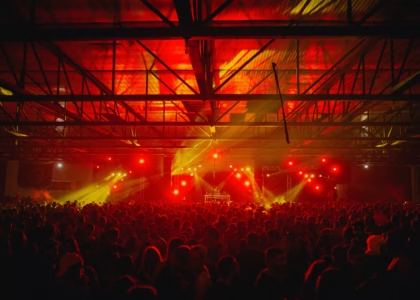
When it comes to throwing a party, Hardbass is the ultimate icebreaker. It is physically impossible to stand still when a 160 BPM off-beat bassline is vibrating through the floorboards. Party Hardbass is where the genre gets to show off its fun, satirical, and culturally rich side.
- The Party Aesthetic: This is where you want the iconic Cheeki Breeki vocal samples, the rapid-fire Russian rap verses, and the most cartoonish, rubbery donk sounds available. The goal here is pure, infectious, undeniable energy. The music should encourage the crowd to form circles, jump in unison, and attempt the legendary synchronized Slav squat.
- Recommended Mixes: Search for “Russian Hardbass Mix (Hard Bass School / DJ Blyatman)” or “Ultimate Hardbass Anthems – Greatest Hits.” These playlists are curated to be massive crowd-pleasers, packed with the viral internet hits that everyone recognizes, even if they aren’t die-hard, everyday fans of the underground electronic genre.
- Essential Party Artists: DJ Blyatman is the undisputed king of the modern Hardbass party track. His collaborations with massive internet personalities (like Life of Boris) have resulted in colossal anthems like “Gopnik” and “Slav King,” which boast tens of millions of streams globally. Hard Bass School and Russian Village Boys are also mandatory additions, bringing a rowdy, punk-rock energy that will immediately elevate the vibe of any room.
The Psychology of 160 BPM: Why It Works
Why does a 160 BPM track with a metallic bassline make you want to lift heavier weights or dance harder? The answer lies in human neurology.
The human brain is naturally wired to entrain to rhythmic stimuli. When you listen to music at a standard 120 BPM, your heart rate and respiratory rate tend to stabilize at a relaxed, steady pace. However, when you subject your nervous system to the 160 to 175 BPM onslaught of a Hardbass track, your body triggers a mild, controlled fight-or-flight response. Your adrenaline spikes, your perceived physical exertion drops, and your focus narrows dramatically.
This neurological reaction is exactly why the genre translates so seamlessly from the gritty, freezing underground warehouses of Saint Petersburg to the modern digital realms of competitive e-sports and heavy athletics. The bouncing donk bass doesn’t just sound heavy; it physically hacks your nervous system’s response to fatigue.
How to Curate Your Own Custom Hardbass Playlist
If you want to build your own ultimate playlist on Spotify or Apple Music rather than relying on pre-made YouTube mixes, you need to structure the energy curve properly to prevent listener burnout.
- The Warm-Up (140-150 BPM): Start with tracks that have a groovy, pumping house feel. Let the listener’s ears adjust to the metallic off-beat rhythm before you blast them with pure speed.
- The Core (150-165 BPM): This should be the bulk of your playlist. Pack this section with classic, donk-heavy tracks from XS Project and DJ Blyatman. Ensure the kicks are heavily distorted to maintain the high energy.
- The Peak (165-175+ BPM): Save your fastest, most aggressive tracks for the end of the workout or the peak of the party at 2:00 AM. Mix in artists who blur the lines between Hardbass, Gabber, and Frenchcore for a maximum, breathless adrenaline rush.
Frequently Asked Questions (FAQ)
Understanding Hardbass Utility
Why is Hardbass specifically popular for weightlifting?
Hardbass operates at an incredibly high tempo, which naturally elevates your heart rate and adrenaline. Furthermore, the genre’s defining feature—the off-beat “donk” bass—creates a mechanical, see-saw rhythm that acts as a perfect metronome for timing repetitive, heavy, grinding lifts like squats and deadlifts.
Is Hardbass safe to play on standard house party speakers?
Hardbass tracks are notoriously mastered to be incredibly loud, featuring heavily distorted, clipped kick drums. If you are playing a Hardbass playlist at a house party, ensure you do not push your consumer-grade Bluetooth speakers or home theater system to absolute maximum volume. The aggressive, sustained low-end frequencies can easily overheat or blow standard, non-club speaker cones.
How do I find Hardbass playlists without distracting lyrics for gaming?
If you find the aggressive Russian vocals distracting while you are trying to hear game audio, search Spotify or YouTube for “Instrumental Hardbass Mix” or “Cyberpunk Hardbass.” Producers like Uamee and Alan Aztec release many tracks that focus entirely on the synthesizer melodies and the bouncing rhythm, keeping your brain energized without pulling your focus away from the screen.
Hardbass is vastly more than a viral internet joke; it is a meticulously engineered genre designed to maximize human kinetic energy. By understanding the subtle differences within the genre—from the dark, driving beats required for a heavy gym session to the satirical, vocal-heavy anthems that ignite a rave—you can perfectly tailor the soundtrack to your exact activity. Whether you are squatting a new personal best, clutching a high-stakes competitive gaming match, or just dancing in a tracksuit with your friends, throw on a curated Hardbass playlist, turn up the volume, and let the donk take over.