When you first step into the world of high-BPM electronic dance music, the terminology can quickly become a blur. Two of the most frequently confused genres in the “Hard Dance” spectrum are Hardbass and Hardstyle. Because both genres rely on aggressive kick drums, incredibly fast tempos, and high-energy festival crowds, casual listeners often use the terms interchangeably.
Calling Hardbass and Hardstyle the same thing is like confusing heavy metal with punk rock. While they share aggressive DNA, they originated in entirely different parts of Europe, utilize vastly different sound design techniques, and have spawned two completely distinct subcultures.
Whether you are an aspiring producer trying to figure out which style of kick drum to synthesize, or a festival-goer wanting to understand the history behind the music, decoding the split between these two genres is essential. We are breaking down the exact differences in tempo, bass synthesis, cultural origins, and visual aesthetics between Hardbass and Hardstyle.
The Rhythmic Core: Tempo and BPM
The first structural difference you will notice between the two genres is the speed at which they operate.
- Hardstyle (150 BPM): Hardstyle relies on a very firmly established tempo. Almost all traditional and modern Euphoric Hardstyle sits perfectly at 150 Beats Per Minute (BPM). Rawstyle (a darker, heavier subgenre) occasionally pushes to 155 or 160 BPM, but the genre generally maintains a heavy, marching pace. This steady tempo allows for massive, sweeping cinematic melodies to play over the top without sounding cluttered.
- Hardbass (150 – 175 BPM): Hardbass is noticeably faster and more frantic. While it can start at 150 BPM, it frequently accelerates into the 160 to 175 BPM range. This blistering speed is what gives Hardbass its signature “bouncy” feel, pushing its energy levels closer to the chaotic speeds of Drum & Bass or UK hardcore.
Sound Design: The “Donk” vs. The Pitched Kick
The absolute easiest way to tell the two genres apart is by listening to how the bass and kick drum interact. They use entirely different synthesis philosophies.
The Hardbass Sound: The Off-Beat “Donk”
Hardbass separates the kick drum and the bassline into two distinct instruments. It relies on a very specific FM (Frequency Modulation) synthesis patch known as a “donk.” A donk sounds like a wet PVC pipe or a hollow metallic tube being struck with a rubber mallet.
Structurally, Hardbass plays a heavy, distorted kick drum on the downbeat (beats 1, 2, 3, 4), and places the metallic “donk” bass exactly on the off-beat (the empty spaces directly between the kicks). This rapid back-and-forth interaction creates a violent see-saw rhythm that forces the listener to jump or bounce.
The Hardstyle Sound: The Pitched Kick
Hardstyle does not use a separate bassline instrument. Instead, the kick drum is the bassline.
Hardstyle producers spend dozens of hours crafting a single “Hardstyle Kick.” They take a standard electronic kick drum, distort it heavily, and give it a long, resonant bass tail. This tail is then pitched to match the musical notes of the song’s melody. A classic Hardstyle kick has a sharp, punchy “Tok” or “Gong” attack, immediately followed by a massive, distorted bass hum. When the synthesizer changes chords, the pitch of the kick drum changes with it.
Cultural Origins: Post-Soviet Squats vs. Dutch Mega-Festivals
The geographical origins of these genres directly shaped how they sound and how they are consumed by fans today.
The Eastern European Hardbass Underground
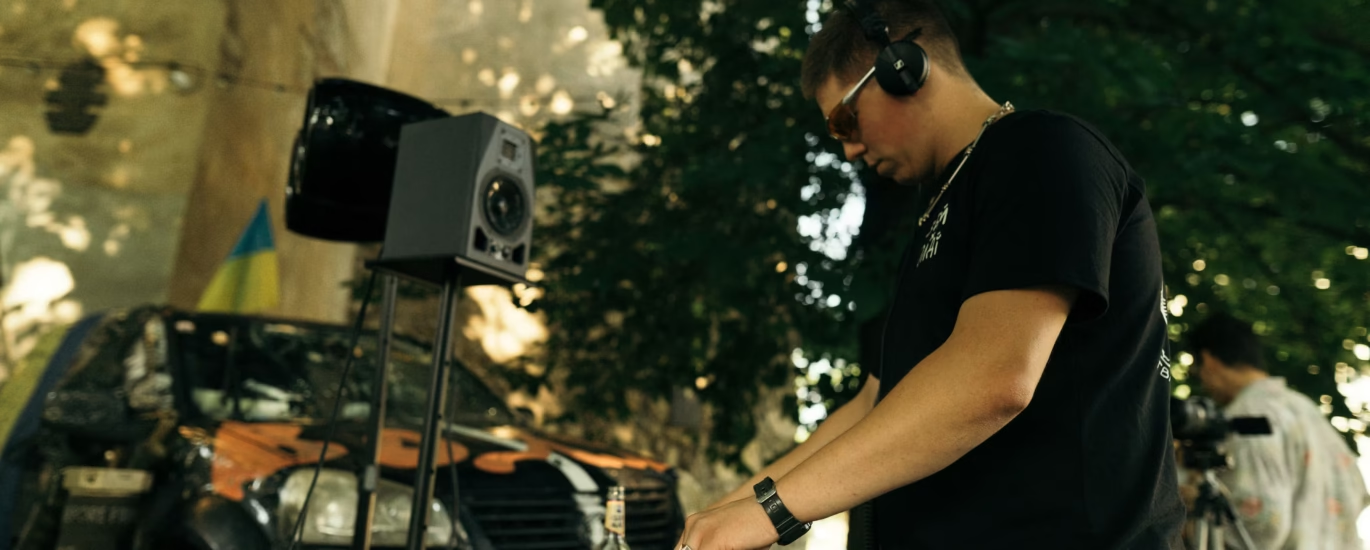
Hardbass originated in Saint Petersburg, Russia, evolving from “Pumping House” in the late 1990s. It was born in gritty, underground warehouse raves and abandoned industrial parks. The genre was quickly adopted by working-class youth (the Gopnik subculture), making it an inherently raw, street-level movement. While it has grown into a massive global internet phenomenon via gaming and meme culture, its soul remains tied to DIY flash mobs, portable speakers, and underground club spaces.
The Dutch Hardstyle Machine
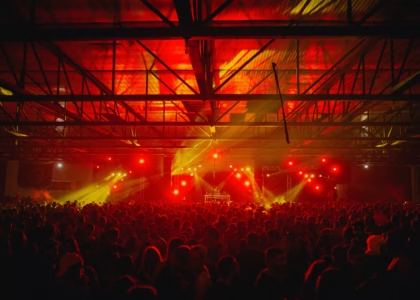
Hardstyle was born in the Netherlands in the early 2000s, evolving from Gabber and Hard Trance. Unlike Hardbass, Hardstyle was structurally designed for massive, highly organized arenas. Today, Dutch event companies like Q-dance host global festivals—such as Defqon.1—which attract over 100,000 attendees. The culture is incredibly theatrical, featuring million-dollar laser shows, massive stage designs, and coordinated firework displays timed perfectly to the music.
The Visual Aesthetic: Tracksuits vs. Cyberpunk
You can often identify whether a track is Hardbass or Hardstyle simply by looking at the crowd, the dancers, or the music video.
The Hardbass Aesthetic:
The visual identity of Hardbass is deeply intertwined with Eastern European street fashion. The unofficial uniform is the three-stripe Adidas tracksuit, flat caps, and balaclavas. The signature dance move is a form of aggressive, synchronized stomping, often performed while squatting (the “Slav squat”) in concrete environments, parking lots, or local playgrounds.
The Hardstyle Aesthetic:
Hardstyle culture aligns much more with mainstream EDM and rave aesthetics. The crowds feature vibrant neon colors, intricate light shows, and cyberpunk-inspired festival gear. The signature dance move is the “Melbourne Shuffle” or “Hakken”—a complex, fast-paced sequence of heel-and-toe gliding and kicking that requires intense stamina and physical coordination to match the 150 BPM speed.
Hardbass vs. Hardstyle: Side-by-Side Comparison
| Feature | Hardbass | Hardstyle |
| Origin | Saint Petersburg, Russia | The Netherlands |
| Typical BPM | 150 – 175 BPM | 150 – 160 BPM |
| Bass Structure | Off-beat metallic “Donk” bass played entirely separate from the kick. | Pitched, distorted kick drum tail that acts as the bassline. |
| Melody Vibe | Repetitive, bouncy, and aggressive synth stabs. | Grand, euphoric, emotional, and highly cinematic. |
| Visual Aesthetic | Tracksuits, balaclavas, concrete industrial settings. | Elaborate festival stages, lasers, neon rave gear. |
| Signature Dance | Synchronized stomping and squatting. | The Melbourne Shuffle or Hakken. |
Frequently Asked Questions (FAQ)
Understanding the Hard Dance Spectrum
Why do Hardstyle kicks sound like a melody?
Because they actually are playing the melody. Hardstyle producers use complex digital processing to isolate the low-frequency “tail” of the kick drum and assign it a specific musical pitch. When the main synthesizer plays a chord progression, the producer pitches the kick drum up and down on a piano roll so the bass frequencies harmonize perfectly with the lead melody.
What is “Rawstyle”?
Rawstyle is a darker, heavier subgenre of Hardstyle. While classic “Euphoric” Hardstyle focuses on uplifting, emotional melodies, Rawstyle strips the melodies back, increases the BPM slightly (155-160), and focuses entirely on aggressive, heavily distorted kick drums and dark, dissonant sound design.
Did Hardbass originate as an internet meme?
No. While internet meme culture (and viral flash mob videos) massively boosted its global visibility in the 2010s, Hardbass existed as a legitimate underground rave scene with dedicated producers, record labels, and physical clubs for a full decade before the internet discovered it.
While Hardbass and Hardstyle share a high-tempo heartbeat and a commitment to heavy, distorted percussion, they offer two completely different musical experiences. Hardstyle is the sound of massive, euphoric Dutch festival stages—a grand, theatrical experience built on meticulously pitched kicks and soaring melodies. Hardbass is the raw, bouncy, chaotic sound of the Eastern European underground—a genre that embraces its street-level roots with a metallic “donk” that forces you to move.
Whether you prefer the emotional melodies of the Dutch mainstage or the relentless bounce of a Russian tracksuit rave, both genres prove that the global appetite for fast, aggressive dance music is stronger than ever.