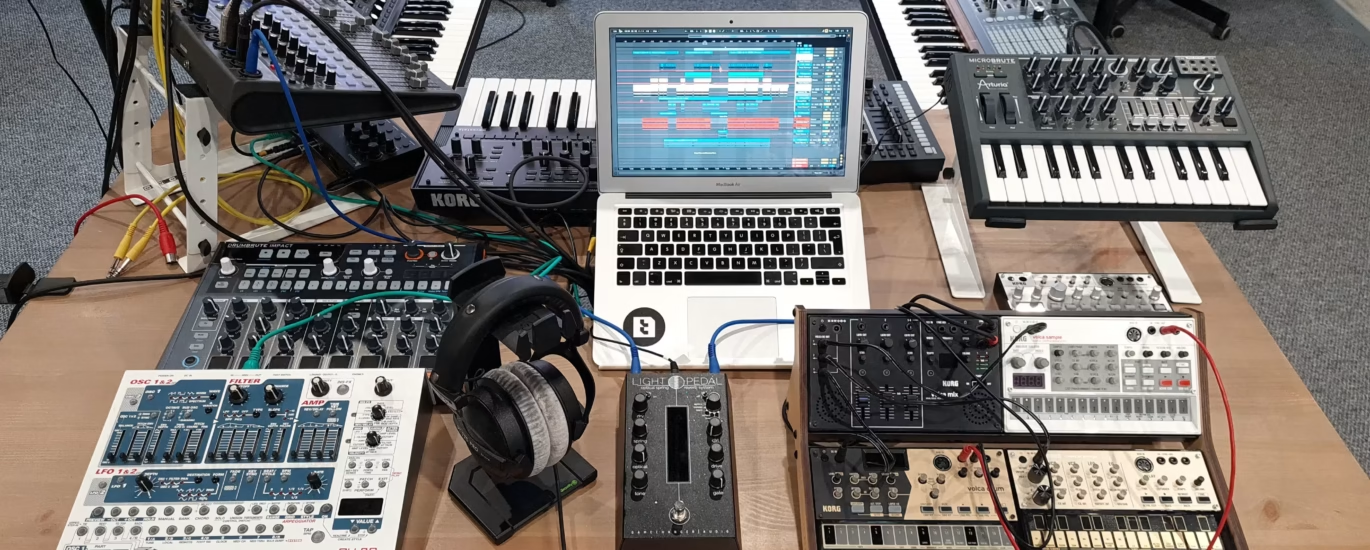
You have spent weeks in your Digital Audio Workstation perfectly dialing in your FM synthesis. Your 909 kicks are heavily distorted, your metallic donk bass bounces perfectly on the off-beat at 160 BPM, and your sidechain compression is surgically precise. The track is finished—but having a bouncing WAV file on your hard drive does not build an audience.
Releasing an electronic music track independently in 2026 requires far more than just uploading an audio file to SoundCloud and hoping for the best. To cut through the noise of thousands of daily releases, you need a calculated rollout strategy. This means navigating global digital distribution platforms, passing strict metadata checks, leaning into the highly specific visual aesthetics of the Hardbass subculture, and leveraging modern meme and gaming communities for promotion.
A successful release is a system. By treating the final mixdown as the starting line rather than the finish line, you can ensure your high-BPM anthem reaches the underground ravers, gamers, and curators who are actively searching for it. We are breaking down the exact step-by-step blueprint for releasing your first Hardbass track, from securing your ISRC codes to launching viral TikTok campaigns.
Phase 1: Digital Distribution and Metadata (4 to 6 Weeks Out)
You cannot upload a track directly to Spotify or Apple Music yourself. You must use a digital music distributor (an aggregator) to act as the middleman between your hard drive and the global streaming platforms.
Choosing Your Distributor
Platforms like DistroKid, TuneCore, Amuse, and CD Baby all serve the same primary function, but they operate on different business models. DistroKid and TuneCore generally charge a flat annual fee for unlimited uploads, which is highly cost-effective for electronic producers who release singles frequently. Others may charge zero upfront fees but take a 15% to 20% cut of your backend streaming royalties. Choose the model that fits your release frequency.
Setting the Timeline
The biggest mistake independent artists make is finishing a track on Friday and trying to release it on Saturday. You must set your official release date 4 to 6 weeks in the future. This window is non-negotiable if you want to trigger algorithmic momentum. It gives the distributor time to process your file, allows you to set up pre-save links, and most importantly, gives you the mandatory lead time to pitch to editorial playlists.
Metadata and File Specs
Your distributor will require specific technical formats. Ensure your final master is a high-quality, lossless file—typically a 16-bit, 44.1 kHz WAV. When filling out your metadata, triple-check your artist name, song title, and featured credits. If you misspell a collaborator’s name, you cannot simply edit it after it goes live without initiating a complicated takedown and re-upload process.
Phase 2: The Visual Aesthetic and Artwork
Hardbass is deeply tied to a very specific, aggressive visual subculture. To capture the attention of the hard dance community, your cover art must visually communicate the energy of the track before the listener even presses play.
Technical Specifications
All major streaming platforms strictly enforce artwork dimensions. Your cover art must be a perfect square, specifically 3000 x 3000 pixels, exported as a high-resolution JPEG or PNG,. It must not contain blurry images, social media handles, website URLs, or excessive text beyond the artist name and track title.
Leaning into the Gopnik Aesthetic
If you are releasing traditional or meme-crossover Hardbass, lean into the established Gopnik street culture aesthetics. The community instantly recognizes visual cues like concrete industrial backgrounds, three-stripe tracksuits, balaclavas, and brutalist Cyrillic-inspired typography.
Cyberpunk and Gaming Visuals
If your track leans more toward the instrumental, gaming-focused side of the genre, borrow visual elements from cyberpunk or tactical shooter aesthetics (think Escape from Tarkov or S.T.A.L.K.E.R.). Dark neon color palettes, hazard stripes, and high-contrast digital artifacts signal to gaming playlist curators that your track belongs in their high-BPM flow-state mixes.
Phase 3: Pitching and Playlisting (2 to 3 Weeks Out)
Playlists are the lifeblood of independent electronic music discovery. With your track uploaded and processing, your next objective is getting it in front of curators.
Spotify for Artists Editorial Pitch
At least 7 to 10 days before your release date, you must log into your Spotify for Artists dashboard and pitch your unreleased track to their editorial team. Fill out every single metadata tag accurately. Tag the mood as “Energetic” or “Aggressive,” and select electronic subgenres that fit. Even if you do not land an official editorial playlist (like Dance Rising), pitching guarantees your track will automatically appear on the Release Radar playlists of anyone who currently follows your profile.
Independent Curator Outreach
Do not wait for Spotify to do all the work. Use platforms like Groover or SubmitHub to pitch your track directly to independent hard dance bloggers, YouTube promotional channels, and user-generated playlist curators. When pitching Hardbass, seek out curators who manage gym motivation playlists, gaming montages, and high-BPM rave lists.
Phase 4: Social Promotion and Meme Marketing
Hardbass has a unique advantage over standard house or techno: it has a massive, built-in internet meme culture.
Short-Form Video (TikTok, Reels, Shorts)
You must create 3 to 5 short-form vertical videos for TikTok and Instagram Reels leading up to the release. Do not just post a static image of your cover art with the audio playing.
- The Studio Breakdown: Show your DAW timeline. Mute everything, play the heavy 909 kick, then bring in the FM donk bass to show how the see-saw rhythm is constructed. Producers and electronic fans love behind-the-scenes technical content.
- The Meme Crossover: Embrace the humor of the genre. Pair your aggressive drop with chaotic, high-energy gaming footage or tongue-in-cheek workout montages. Hardbass thrives on viral, high-adrenaline visual pairings.
Engaging the Gaming Community
Find Discord servers, subreddits, and Twitch streamers dedicated to fast-paced competitive shooters or tactical survival games. Reach out to smaller Twitch streamers and offer your track as DMCA-free background music for their broadcasts. If a streamer with 200 viewers plays your bouncing 160 BPM track during a clutch moment, you instantly gain a highly targeted audience asking for the song name in the chat.
Phase 5: Release Day and The Momentum Phase
When release day finally arrives, your job shifts from preparation to analytics and community engagement.
- Update Your Links: Swap out all your pre-save links in your social media bios for live, multi-platform smart links (using services like Linktree or Toneden) so fans can immediately route to Spotify, Apple Music, or YouTube.
- Algorithmic Tracking: In the two weeks following your release, closely monitor your Spotify for Artists data. Look specifically at your “Discover Weekly” and algorithmic radio stats. If your track has a low skip-rate and high save-rate, the algorithm will begin testing it in front of wider, non-follower audiences.
- Keep Pushing Content: The biggest error artists make is going silent the day after release. Continue posting your short-form videos for at least 3 to 4 weeks post-launch to maximize your track’s window of relevance.
Respect the Process
Producing a heavy, club-ready Hardbass track is an achievement, but successfully pushing it into the global streaming ecosystem is an entirely different skill set. By committing to a strict 4-to-6-week distribution timeline, ensuring your cover art meets platform specifications, and aggressively pitching to gaming and electronic music curators, you give your music the logistical runway it needs to take off. Embrace the unique cultural aesthetics of the genre, leverage short-form video, and watch your 160 BPM bounce spread across global dance floors and gaming lobbies.